Death
Major Arcana XIII
In short
- Upright
- An ending that makes room for transformation.
- Reversed
- Clinging to what is over or fearing transition.
What the card shows
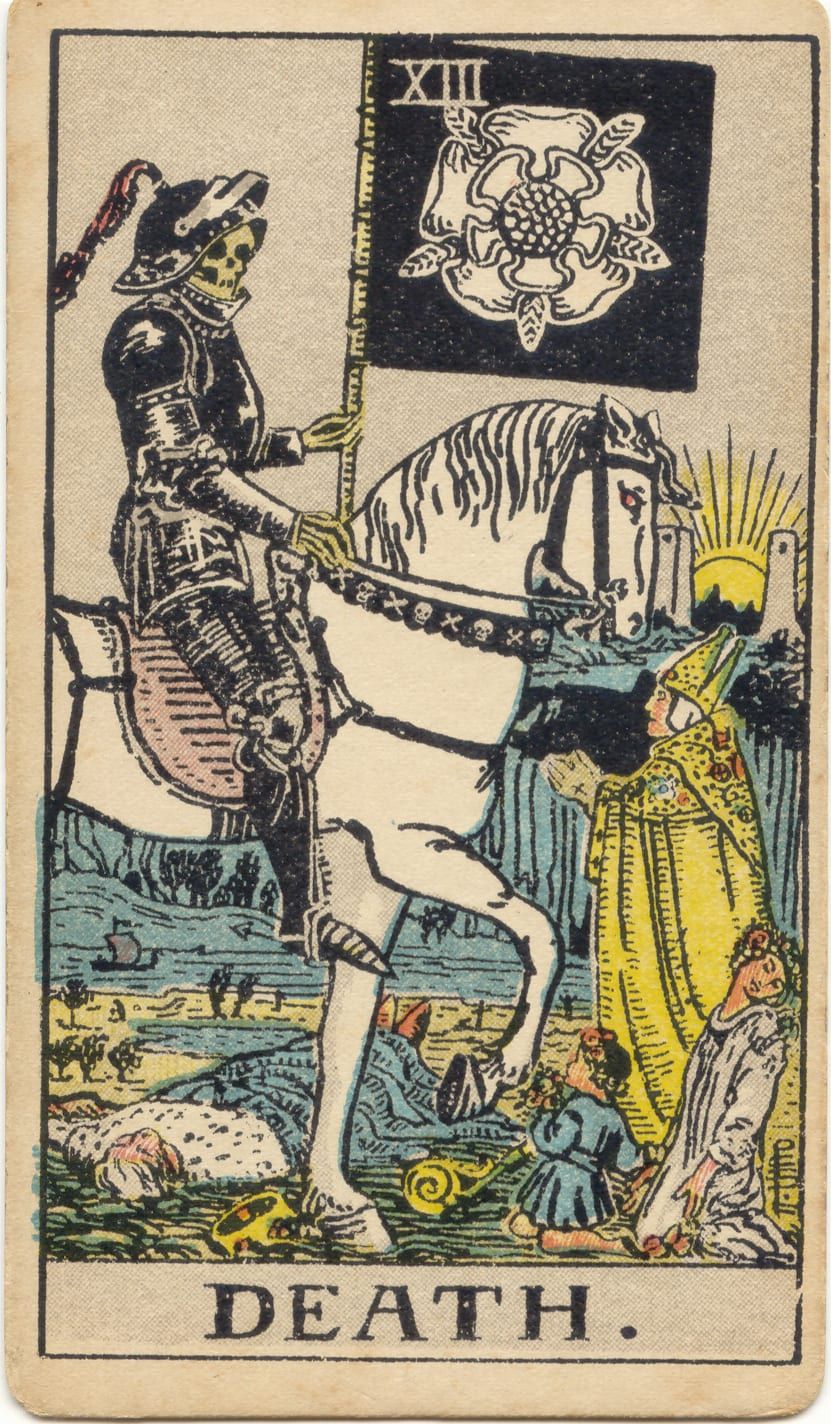
A skeleton in black armour, his helmet topped with a red plume, rides slowly on a white horse. He carries a black banner bearing a white five-petalled rose, and skulls decorate the bridle. He holds no weapon, yet king, maiden and child are already down before him: the king lies on the ground with his crown by the hooves, a maiden in white kneels and turns away, a child in blue kneels and looks up. A bishop in a yellow robe and mitre stands waiting, hands joined. Behind them a boat sails down a river, and the sun shines between two towers on the horizon.
Upright
No card frightens people more, yet the thirteenth trump is rarely about physical death. Its subject is the end of a stage: a job, a relationship, an old picture of yourself, the place you live. Upright, it can point to a transition already under way, even if you haven’t named it yet. The rider isn’t attacking or hurrying, and he carries no scythe. He simply rides on, and king and child alike go down before him.
Endings make room. While the old thing still fills your hands, hours and attention, the new has nowhere to come in, so whatever is already over in substance is best not dragged out. Grief belongs here, and there’s no need to hide it; saying goodbye is work too. Still, the artist placed the sun between the towers in the same scene as the ending.
Keywords: end of a stage, transition, making room, letting go, transformation
Reversed
The rider seems to have hit a closed door: the change is ripe, but you won’t let it in. In this position the card can point to clinging to what’s finished, such as a relationship that has become a formality, a job that no longer fits, a plan you no longer believe in. Life doesn’t end, but it doesn’t move either; the days blur into one another like sleepwalking.
Fear of loss can keep the old in place: who would you be without it? That fear is worth looking at soberly. What exactly would you lose? And what stays with you whatever happens, from experience and skills to the people who matter? The end of a stage doesn’t cancel the good that was in it.
Keywords: clinging, fear of transition, inertia, sleepwalking, a door held shut
Death in relationships
In love, Death seldom hands down a breakup as a verdict. More often it marks the end of one form of the relationship: the honeymoon, life before children, roles that suited you both a decade ago. A couple can come through that change together if both accept the old version won’t return. Reversed, it asks whether you’re holding on to a person, or an idea of them, out of fear of being alone. And sometimes the card simply says a story is complete.
Death at work
A project shut down, a role you’re leaving, a direction that no longer pulls you: this is how Death tends to look at work. Reversed, it points to a job that has outlived itself and carries on out of habit, and to the fear of stepping out of a familiar role. Treat the ending like a clear-out. Tie off loose ends, hand things over properly, thank the people you worked with, and only then pick up something new.
Death as advice for the day
Close something today that has ended while you keep pretending it hasn’t: a subscription, an old promise, a draft that will never be finished, an argument going in circles. Delete it, decline it, say no. Then notice how much room that frees up. Sadness afterwards is part of saying goodbye, so let it be there.
The card’s lesson
Death usually stands for the end of a stage, not literal death.
A question for yourself
What is it time to finish, to make room for something new?
Place on the Fool’s journey
- Major Arcana
- Major life themes and turning points.
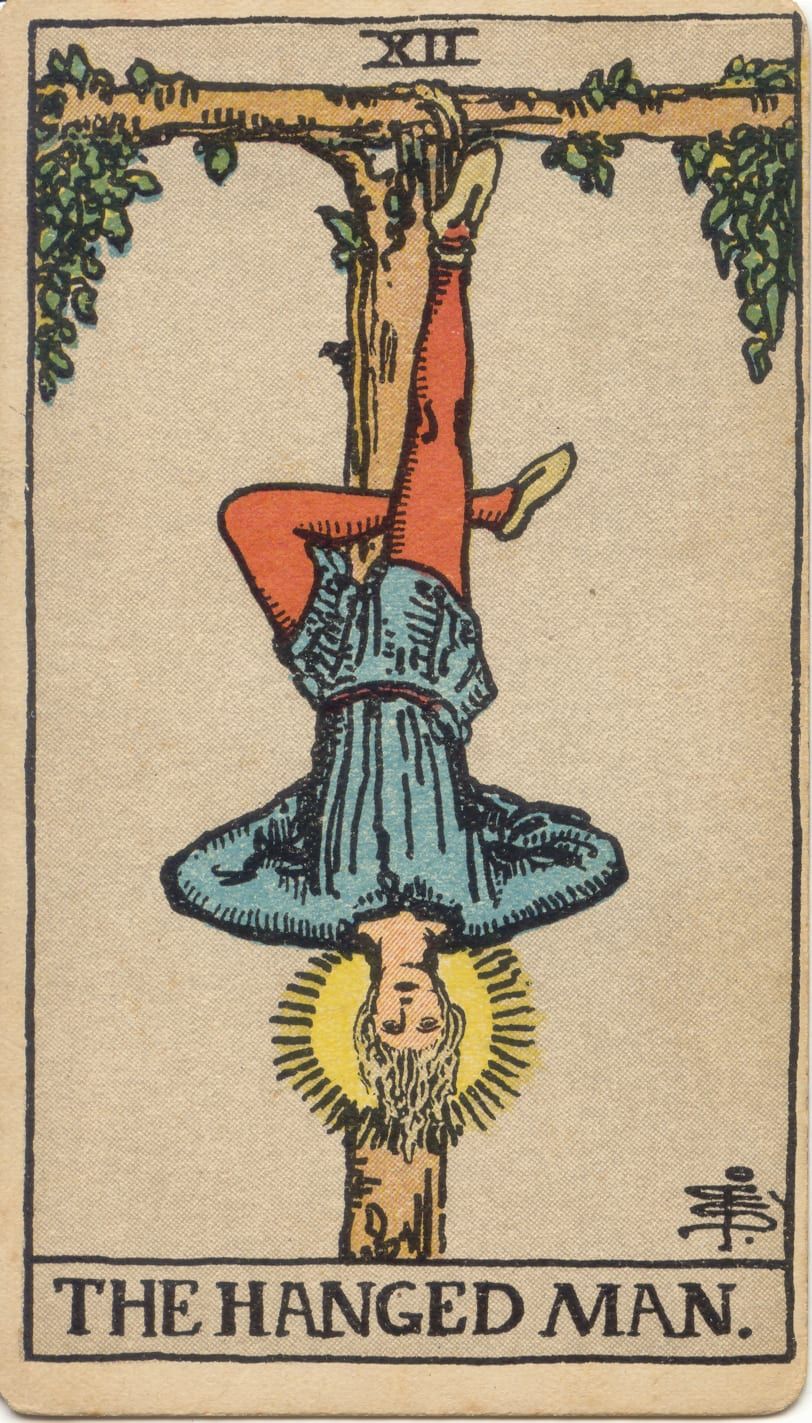
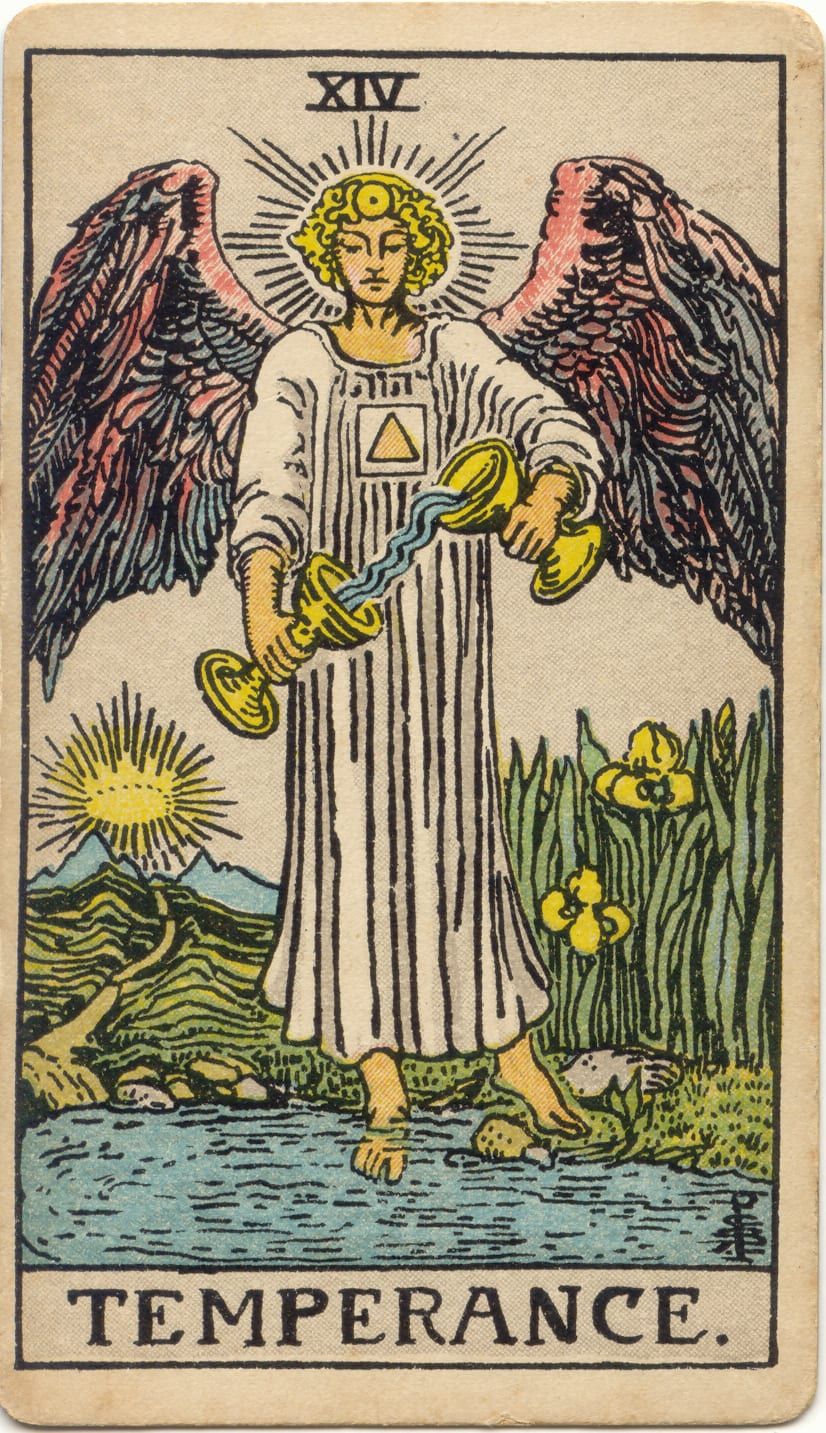
Number XIII follows the Hanged Man, who chose to stop and see the world upside down. Now the Fool meets a change that can’t be undone, only lived through. The 1909 card drops the old image of the reaping skeleton and shows a slow horseman instead: death as a passage. Temperance (XIV) comes next, and the order makes sense, because after an ending comes the time to blend what remains.
Nearby in the deck
More of the Major Arcana
Spreads
Ask Arkana: a card will answer your question
Write your question to the bot in Telegram. It lays out the cards, and the reading takes your question into account.
Ask the cards in Telegram