The Hierophant
Major Arcana V
In short
- Upright
- Tradition, shared wisdom, and learning from a guide.
- Reversed
- Questioning convention or following rules without reflection.
What the card shows
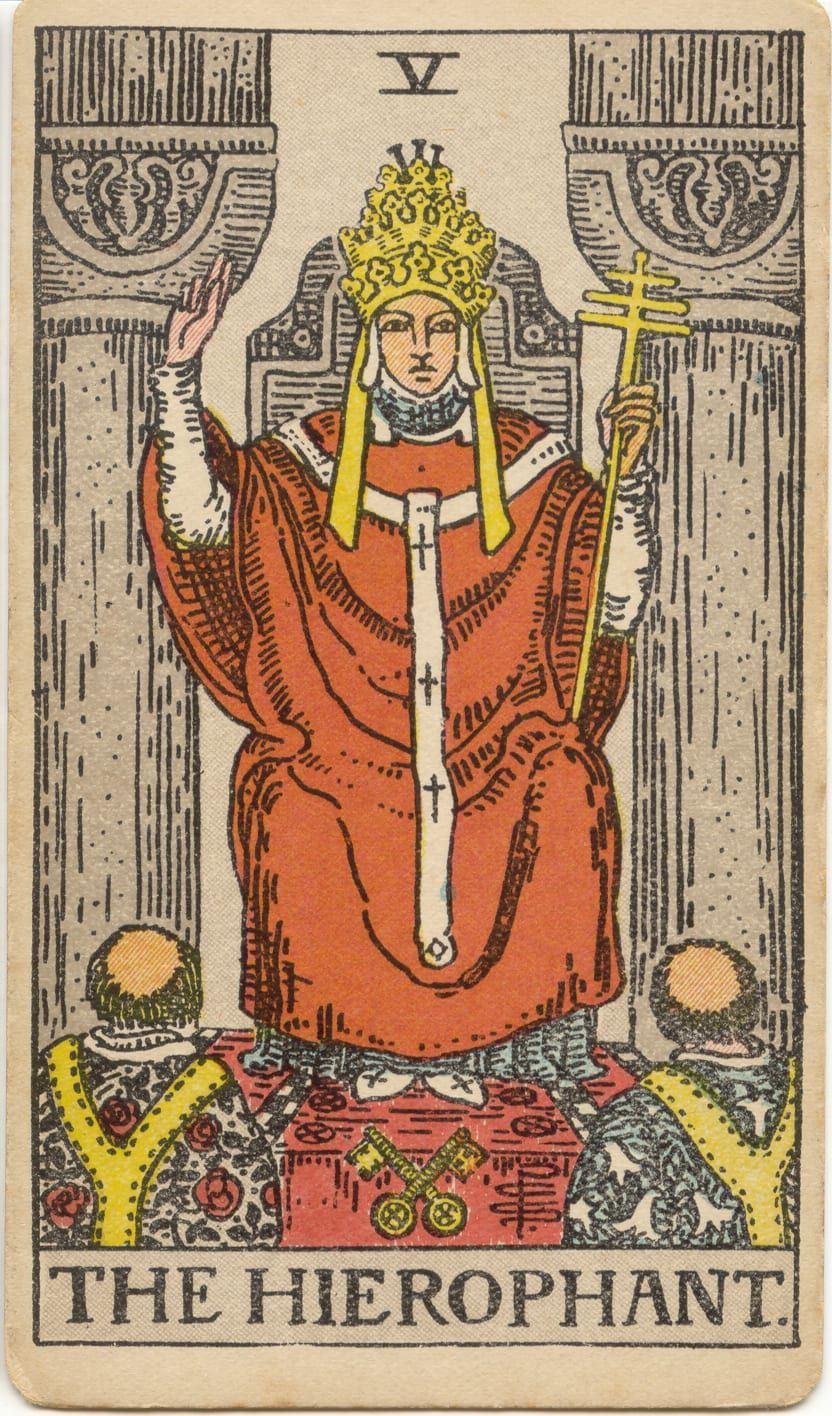
Between two grey stone pillars a pontiff sits enthroned in red vestments and a triple gold crown. His right hand is raised in blessing; his left holds a gold staff ending in a triple cross. A white stole marked with small black crosses hangs down his front. At his feet, on a red dais, lie two crossed golden keys, and before him two tonsured ministers kneel with their backs to us, one robed in a pattern of red roses, the other in white lilies.
Upright
The Hierophant is a go-between, handing on what was gathered before us. He stands for a tradition, a school, a tested method, a mentor you would do well to approach as a student. Sometimes the best move is to walk a road thousands have walked already: learn the basics, sit the exam, perform the ritual the way it has been performed for generations. A voice of your own comes more easily once you’ve learned the shared language.
The crossed keys at his feet stand for access to knowledge, given to those who come to learn. The card is about belonging to a community, a profession, a family with its customs, people who share your values. There’s conformity in it too, but upright that means a deliberate choice to play by shared rules because they help you as well. It goes best when you know why you follow a rule.
Keywords: tradition, mentor, learning, shared values, belonging
Reversed
Reversed, the Hierophant repeats a rite long after anyone remembers why it began. The rule is kept alive by fear now that its use is gone: fear of falling out of the circle, of disappointing your elders, of “what will people say?” People end up living on someone else’s timetable, studying the wrong subject, marrying because everyone their age already has, staying in a job that’s considered respectable. A simple test helps: can you explain in your own words what this rule is for? If not, perhaps you are holding on to a form the meaning left long ago.
Some people reject in advance anything that comes from elders, school or the system, even what works. That kind of rebellion is as automatic as obedience, and depends on you just as little. The card suggests separating content from form; the teacher may not suit you, yet what he passes on can still be worth having. Freedom from a tradition starts with knowing exactly what you are giving up.
Keywords: blind obedience, arguing for its own sake, empty ritual, dogma, reflex rebellion
The Hierophant in relationships
Love under the Hierophant leans toward commitment and shared values: making the relationship official, meeting the family, a union your people recognise. Before you build further, talk through what you both believe about children, home life, faith and family customs. Reversed, it asks whose script you’re living by, yours or someone else’s: “it’s time you settled down”, “that’s what people do”, “not in our family”.
The Hierophant at work
The Hierophant’s work is study, standards and mentoring. The card favours training, certification, work in large organisations, and seeking out an experienced person to learn from. When it is reversed, procedures lose their point, red tape spreads, and it gets tempting to fight the system where talking it through would be simpler and more honest. And if you are the mentor, remember that explaining is work too.
The Hierophant as advice for the day
Today, put a question to someone who knows more than you about whatever is on your mind. Or go back to basics: the textbook, the rules, the first lesson you once skipped. Then take one of your own rules about work, food or relationships and ask whom it serves. If it serves you, keep it. If it serves other people’s expectations, consider whether you need it.
The card’s lesson
The Hierophant explores tradition, learning and the values people share.
A question for yourself
Which rule truly serves your purpose?
Place on the Fool’s journey
- Major Arcana
- Major life themes and turning points.
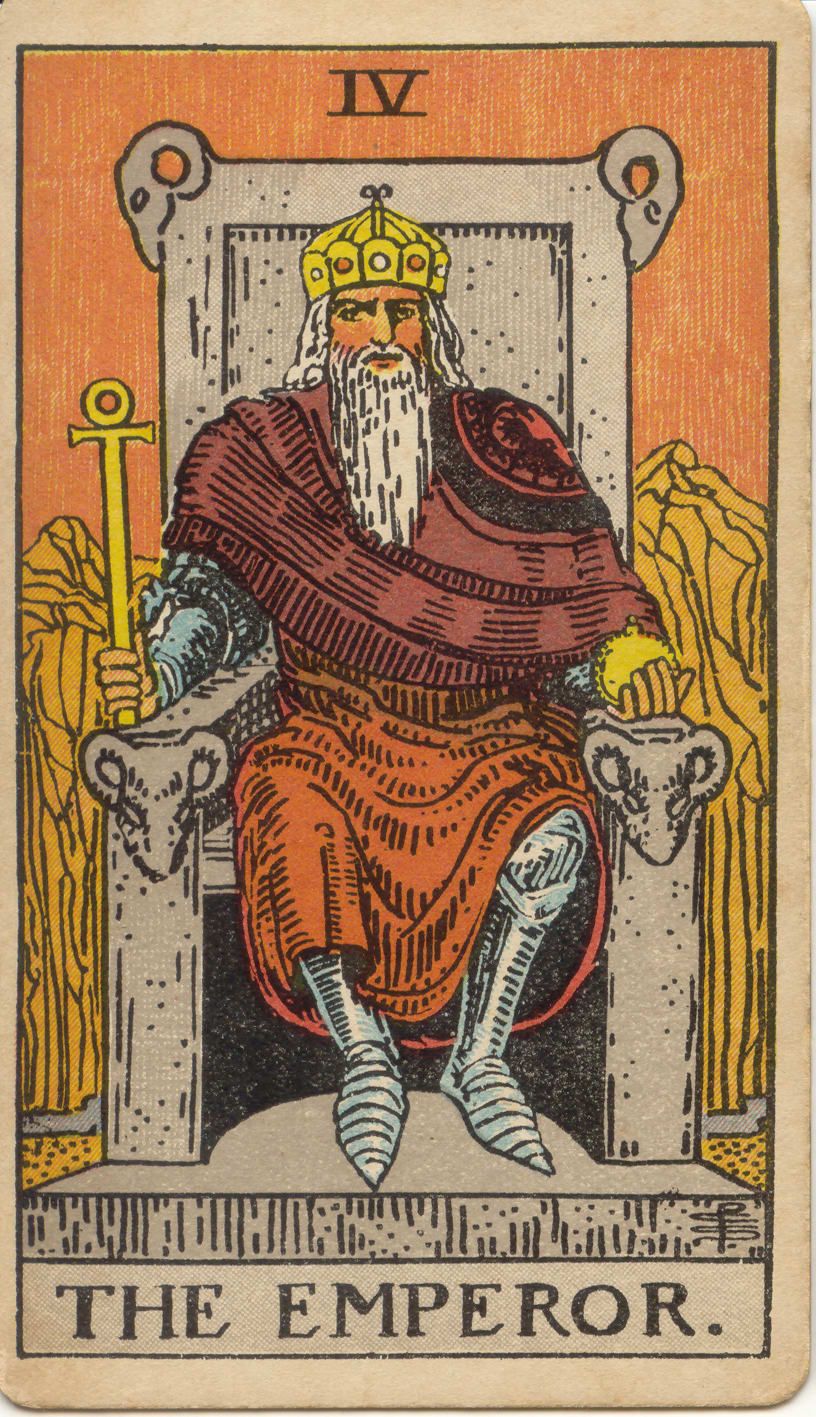
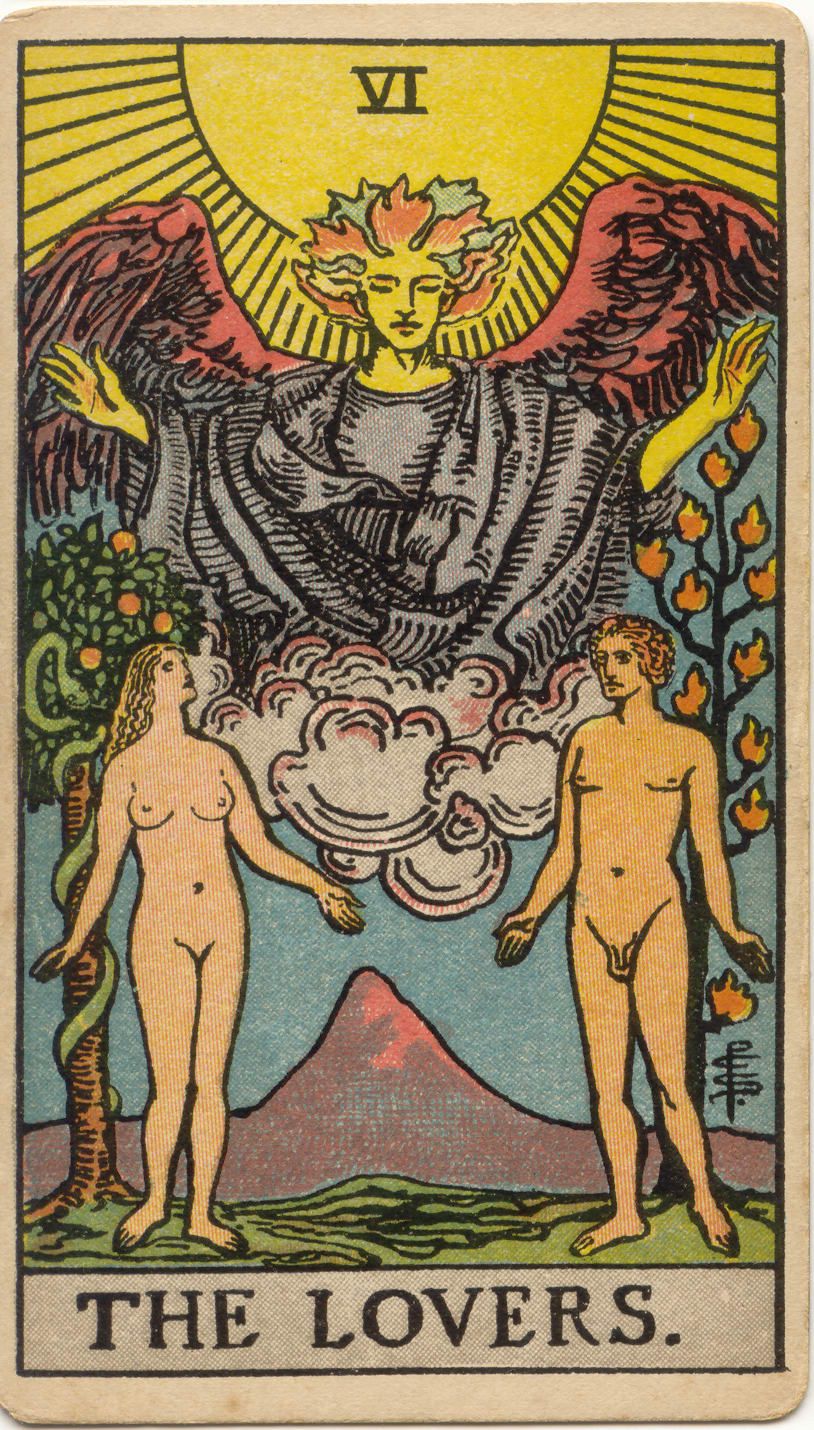
Fifth, the traveller meets the Hierophant. The Emperor taught him to live under the laws of the state; the Hierophant brings him into a community, teaching the rites, the language and the values that bind people together. He answers the High Priestess from the other side: she keeps hidden knowledge, he hands on open teaching to anyone willing to learn. After him the traveller faces his first choice of his own, at the Lovers.
Nearby in the deck
More of the Major Arcana
Spreads
Ask Arkana: a card will answer your question
Write your question to the bot in Telegram. It lays out the cards, and the reading takes your question into account.
Ask the cards in Telegram